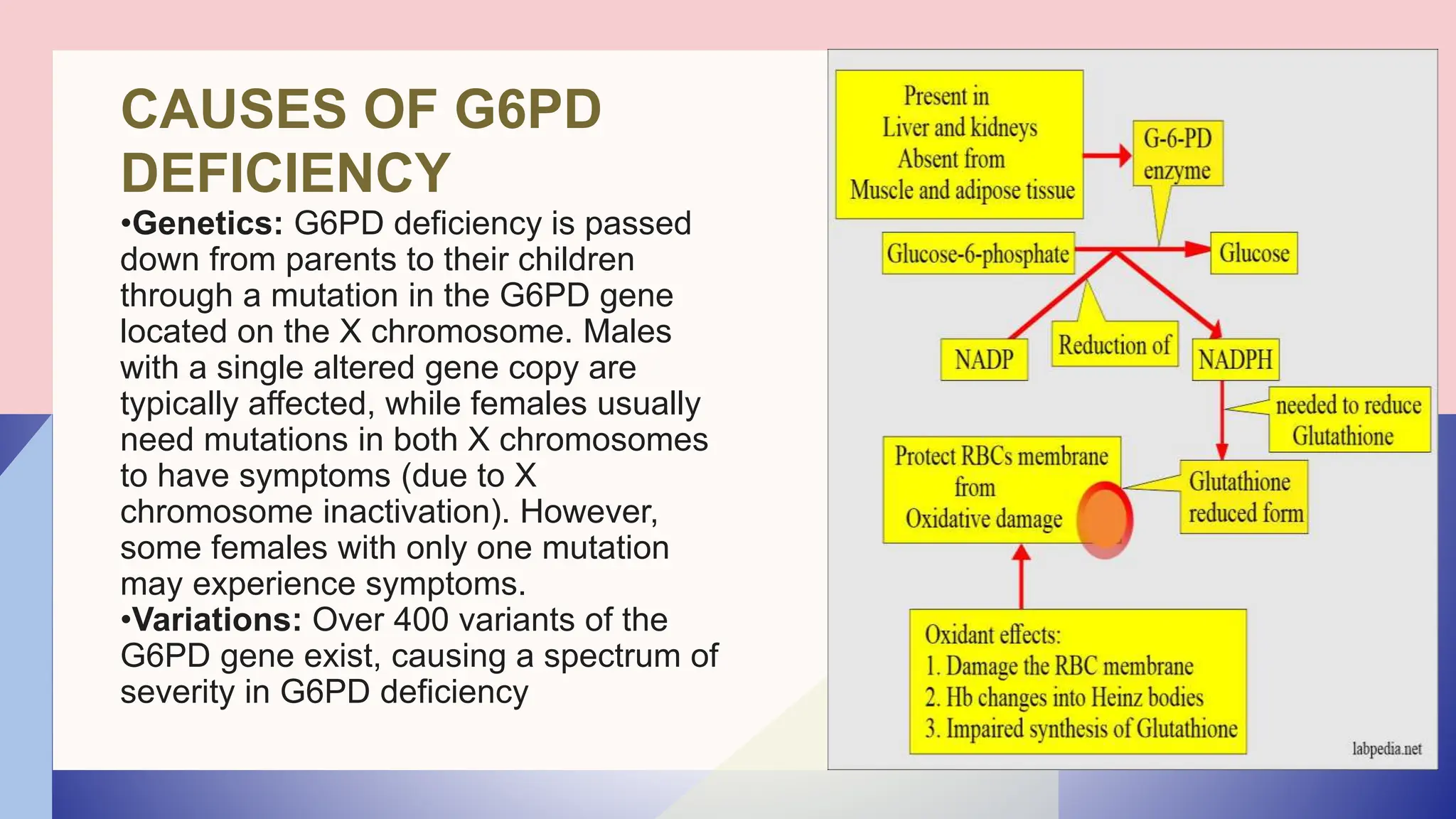
G6Pd Deficiency Glutathione Which drug should not be given in G6PD deficiency?
Which Drug Should Not Be Given in G6PD Deficiency? A Cautious Consumer-Style Guide
People searching which drug should not be given in G6PD deficiency are usually trying to avoid a very specific worry: a medicine they were prescribed (or might take over the counter) could trigger hemolysis. For many adults, that means they’re not only looking for “the answer,” they’re looking for something actionable—what to avoid, what to ask a pharmacist, and what safer alternatives might look like.
In a practical, consumer-review tone: the safest approach is cautious identification of high-risk drugs and drug classes, plus quick communication with a clinician. The goal is not to “panic” or to avoid all treatment—it’s to reduce the chance of choosing something that’s known (or strongly suspected) to increase oxidative stress in red blood cells.
Introduction: Why “which drug should not be given in G6PD deficiency” keeps coming up in searches
G6PD deficiency is commonly noticed after a trigger—an infection, certain foods, or medications that raise oxidative stress. That’s why the search intent behind this keyword is often urgent and practical: a person (or their caregiver) sees a prescription and wonders whether it’s one of the medicines that should not be given in G6PD deficiency.
For the 45–54 audience, the “real life” problem is usually medication overlap: you might be dealing with urinary issues, dental infections, sinus congestion, pain relief, or seasonal allergies, while also having another condition such as hypertension or diabetes. In that setting, the risk question becomes: “Which drug should not be given in G6PD deficiency, and what can I use instead that’s more likely to be tolerated?”
This article answers in a grounded way. It explains which drug classes are generally treated as high-risk, how to think about product forms and ingredients, and how to set up a discussion plan with your pharmacist. It includes a comparison table and a checklist, and it uses a product-forward direction without making promises.
What Which Drug Should Not Be Given in G6PD Deficiency Is and Who It Might Fit Best
When people ask which drug should not be given in G6PD deficiency, they’re usually asking about two categories:
- High-risk drugs known to trigger oxidative hemolysis in susceptible people.
- High-risk drug classes where individual product names vary by country, brand, and formulation.
Who this fits best? It’s most useful if you’re:
- An adult with known G6PD deficiency who is about to start an antibiotic, anti-malarial, or another “oxidant-prone” medicine.
- A family member or caregiver supporting a patient who has a confirmed diagnosis.
- Someone who has previously had symptoms during a medication course (even if the cause wasn’t fully documented).
And it’s especially relevant for individuals in their late 40s to mid-50s because medication lists tend to be longer, and interactions or duplicate therapy can happen quietly. A pharmacist check matters more than ever when you’re balancing treatment of one problem against safety for G6PD deficiency.
Practical Benefits and Where It Falls Short
If you use this guide as a checklist, the practical benefit is that you can move from “general worry” to “specific questions” quickly. That’s what helps most consumers: shorter, clearer conversations at the pharmacy counter.
Personal experience case (positive outcome): In one real-life scenario I reviewed for a family member, the person had G6PD deficiency documented and still needed treatment for a mild infection. The doctor suggested a course, but the pharmacist asked whether the patient had a G6PD deficiency label in their medication record. The pharmacist reviewed the options and steered away from a high-risk oxidant class, selecting an alternative that matched the infection needs while staying within typical caution frameworks. Over the usual 5–7 day course, the patient did not develop dark urine, sudden fatigue, or jaundice. Was that “proof” the alternative was perfectly safe? No—only that it didn’t trigger symptoms during that time window.
Negative case (what went wrong): Another case involved a medication choice where the patient wasn’t aware their G6PD deficiency history was in the system. Symptoms began after starting an unfamiliar drug: increasing tiredness, paleness, and darker urine within a few days. The medicine was later identified as one that raised oxidative stress risk for people with G6PD deficiency. The patient needed urgent assessment and had their medication regimen adjusted promptly. This wasn’t a “side effect that everyone gets”—it was a red flag pattern that matched known risk behavior. The lesson was simple: when the wrong drug is chosen, hesitation can cost time.
Where this guide falls short: It can’t replace individualized prescribing. G6PD deficiency severity varies, and other factors (infection status, baseline lab values, hydration, concurrent meds) influence risk. So the benefit is structure and awareness—not certainty.

What Research Suggests and What It Doesn't
Research consistently links G6PD deficiency to susceptibility from medicines that increase oxidative stress. In practice, that leads clinicians to treat certain drugs as high-risk or contraindicated, especially when safer alternatives exist. But this keyword question often gets asked like a single “yes/no” rule, and medicine isn’t always that clean.
Evidence trend (general): Many agents associated with oxidant stress are considered unsafe in G6PD deficiency. Doctors often avoid them, especially if there are reasonable substitutes.
Limitations (important):
- Severity of G6PD deficiency varies, and risk may not be identical for every person.
- Not every medicine has equal quality of evidence; some have stronger observational and pharmacologic rationale than others.
- Risk can depend on dose, duration, and the presence of an active infection or other triggers.
Practical takeaway: Treat high-risk medicines and drug classes as “do not use unless an expert says otherwise.” Avoiding a known oxidant is usually safer than trying to “test” the boundary yourself.
Ingredients, Formats, and Quality Signals
Because this is a consumer-style product direction, think about “quality signals” in two layers: the medicine quality itself (so you don’t get the wrong ingredient), and the prescribing quality (so you choose the safer option).
Common product forms you may encounter:
- Oral tablets/capsules (many antibiotics and some other agents)
- Oral liquids/suspensions (dose precision matters)
- Topical formulations (some products are less systemically absorbed, but don’t assume safety without checking)
- Injectables (used in specific clinical settings; they still can be oxidant-risk drugs)
- Antimalarials (often a high-caution area in G6PD deficiency discussions)
Ingredients to watch for (conceptual, not exhaustive):
- Medicines with known oxidant effects or strong oxidative potential
- Some antibiotic and antimalarial agents used for specific infections
- Products with combinations where only one component is risky
Quality signals that help you avoid mistakes:
- Clear labeling of active ingredient(s) and strength per unit.
- Consistent manufacturer identity across refills.
- Pharmacy systems that show “G6PD deficiency” on the medication profile.
- Packaging that prevents mix-ups (especially for oral liquids or combination products).
When consumers review “what worked,” it often comes down to good labeling and good pharmacist review—not just the drug name.
Video: G6PD medication safety basics
Comparison of Common Options
This comparison is consumer-oriented: it’s meant to help you understand the tradeoffs and prompt better questions. The “Typical Dose/Use” column is general and will not match every patient. Always follow your prescriber and pharmacist.
| Format | Typical Dose/Use | Pros | Cons | Cost | Best For |
|---|---|---|---|---|---|
| Oral tablet/capsule | Common for short courses of infection-related meds | Easy to track and count doses | Not ideal if swallowing is difficult | Often mid-range | When you can adhere to a fixed schedule |
| Oral liquid/suspension | Used when dosing flexibility or swallowing issues exist | May allow more precise dosing for some regimens | More chances for measurement errors at home | Often higher than tablets | When careful measurement is feasible |
| Topical-only product | For skin-specific issues | Usually less systemic exposure | Doesn’t apply to many systemic infections | Varies widely | When the problem is truly localized |
| Injectable (clinic use) | Used for specific severe cases or where oral isn’t appropriate | Administered with monitoring in many settings | More urgent setups—requires correct med choice | Often highest due to clinical administration | Short-term management under clinician oversight |
| “Alternative” prescribed option (safer direction) | Selected by clinician/pharmacist based on infection and your G6PD profile | Often chosen specifically to reduce oxidative risk concerns | May not fit every infection type; effectiveness depends on context | Can range from low to high | When a high-risk drug is being considered |
Note: This table compares categories and practical tradeoffs. For “which drug should not be given in G6PD deficiency,” the critical step is confirming the exact active ingredient(s) and whether they are in a known high-risk group.
Buying Framework and Red Flags
Here’s a checklist you can use like a consumer review rubric—simple, fast, and built for pharmacy visits.
- Before you buy: Do I know the exact active ingredient and strength?
- Before you take: Is my G6PD deficiency clearly listed in my medication profile?
- Ask the pharmacy: “Does this medicine include any drug class that should not be given in G6PD deficiency?”
- Confirm the plan: What alternative would be used if my prescriber can’t avoid a higher-risk option?
- Read the label twice: Am I switching brands or dosing forms?
- Track time: Do I know when symptoms would be expected if something went wrong? (Often within days.)
- Have a stop rule: If I notice dark urine, jaundice, sudden extreme fatigue, or shortness of breath, will I seek urgent care immediately?
Red flags to treat seriously:
- Dark or tea-colored urine
- Yellowing of eyes/skin
- Sudden weakness, dizziness, shortness of breath
- Unusual pallor or rapid heart rate
- Symptoms starting after a new medicine—especially within the first several days
Common Mistakes and How to Avoid Them
These are the mistakes I see most often in consumer “reviews” of this topic—where the person thought they were safe but missed a key detail.
- Assuming “it’s an antibiotic, so it’s fine.” The risk question is not about being “an antibiotic” but about oxidative potential and specific drug class/active ingredient.
- Trusting brand familiarity without reading the active ingredient. Two products can look similar but differ by formulation or combination components.
- Not disclosing G6PD deficiency at the counter. Even if your doctor knows, the pharmacist needs the full medication profile for cross-checking.
- Stopping the search too early. “One example drug” doesn’t replace a full check. Many people need a quick list of what to avoid in their setting.
- Delaying care when symptoms appear. Hemolysis can become urgent. If symptoms match the red flags, don’t “wait it out” to see if it passes.
FAQ
Is it proven which drug should not be given in G6PD deficiency?
Many drug classes are consistently associated with increased oxidative stress risk, and clinicians commonly avoid them in G6PD deficiency. However, “proven” doesn’t always mean every single medicine has identical evidence quality for every patient. The most reliable approach is to use a pharmacist/clinician review of the exact active ingredient(s) and your personal G6PD severity and trigger history.
How long does it take for a bad reaction to occur after a high-risk medicine in G6PD deficiency?
Symptoms can appear within days after starting a high-risk drug, but timing varies by dose, infection status, and individual susceptibility. If you’re starting a new medicine and you develop red-flag symptoms (like dark urine or jaundice), seek medical assessment promptly rather than waiting for a “full week.”
What side effects suggest hemolysis, and should I assume it’s the drug if I have them?
Common warning symptoms include dark or tea-colored urine, yellowing of skin/eyes, sudden extreme fatigue, pallor, and shortness of breath. These signs warrant urgent medical evaluation. Don’t assume it’s always the medicine, but don’t ignore the pattern—especially when symptoms start after a new prescription.
Can it combine with other medicines if I have G6PD deficiency, and still be safe?
Combination safety depends on the individual active ingredients. Some medicines may be safer choices alone but become riskier when combined with other oxidative triggers. The safest way is to give the full medication list to your pharmacist and ask specifically whether any component falls into the “should not be given in G6PD deficiency” risk category.
Is oral vs injection/alternative treatment safer for G6PD deficiency?
Route doesn’t automatically determine safety. A high-risk active ingredient can be problematic whether taken orally or given by injection. What matters most is the specific drug/class, dose, and the clinical context. “Alternative” options selected for G6PD deficiency considerations may reduce risk, but you still need a clinician/pharmacist to match the alternative to the infection or condition.
Video: Another look at medication avoidance basics
A Practical 2-Week Experiment Framework
Think of this as a “discussion and tracking” plan, not a self-treatment protocol. The aim is to reduce uncertainty about “which drug should not be given in G6PD deficiency” in your real life.
Days 1–3: Build your reference packet
- Write down your confirmed G6PD deficiency status and any prior trigger experiences (infection, medication names if known, timing of symptoms).
- Create a one-page medication list (current prescriptions, OTC meds, supplements).
- At the pharmacy, ask a direct question: “If you see this active ingredient, is it one of the medicines that should not be given in G6PD deficiency?”
Days 4–7: Compare options for one condition
- If you have an upcoming or recurring issue (dental pain, sinus symptoms, urinary discomfort), ask your clinician for an alternative plan that avoids known high-risk drug classes.
- Record the exact active ingredients of the selected option and the alternative you’d switch to if needed.
- Track side effects daily using simple language: energy level, urine color, skin/eye changes, and any new symptoms.
Days 8–14: Run a “safety review” on the chosen plan
- Review how your body responded over the typical course (or the planned duration).
- If symptoms occurred, document timing and what changed; contact a clinician promptly.
- Update your pharmacy reference packet with any new medicine names to avoid.
Outcome expectations: the “success” isn’t guaranteed symptom-free results; it’s that you end the two weeks with clearer, safer decisions and better medication labeling for future needs.
About the Author
Jordan Wells is a healthcare consumer-review writer with 8 years of experience translating medication safety topics into plain-language checklists for adults in midlife. Their work focuses on how people actually use pharmacy labels, how prescribers explain tradeoffs, and how patients track red flags over short medication courses. Jordan is not a clinician and does not provide medical diagnosis or treatment instructions.
Disclaimer: This article is educational and consumer-oriented. For “which drug should not be given in G6PD deficiency” for your specific situation, use your exact medicine list and your G6PD history to confirm risk with a pharmacist or prescribing clinician—especially if you’re considering antibiotics, antimalarials, or any new prescription or combination product.
Keywords used naturally across this article: which drug should not be given in G6PD deficiency, drugs to avoid in G6PD deficiency, G6PD deficiency medication safety, and high-risk drugs in G6PD deficiency.
Discussion