L Glutathione Whitening Pills Which glutathione pill is best for skin whitening?
Which Glutathione Pill Is Best for Skin Whitening? A Cautious Consumer Review for Men
“Which glutathione pill is best for skin whitening?” is showing up more often in searches because men are looking for faster-looking improvements to tone without the maintenance burden (or commitment) of procedures. The keyword blend—glutathione pills, skin whitening, and even tone—matches the typical intent: people want a supplement recommendation they can start quickly, ideally something that fits a simple daily routine.
Still, it’s important to be honest about expectations. Glutathione is a naturally occurring antioxidant made in the body. Oral glutathione supplements are widely marketed for “skin whitening,” “brightening,” and “even complexion,” but the real-world outcome varies a lot by product form, dose, diet, sun exposure, and your baseline skin tone and concern (dullness vs. uneven pigment vs. post-inflammatory marks).
In this review, I’ll cover the glutathione pill types that are commonly sold, what to check on the label, how long people typically test them, and the red flags that often signal “marketing-first” labeling rather than consumer-friendly quality. I’ll also share one personal experience case (with details) and one negative case, so you can calibrate what “working” and “not working” can look like.
What Glutathione Pills Are and Who It Might Fit Best
Glutathione is involved in antioxidant defense and cellular processes. In supplement form, glutathione pills are usually positioned as an oral way to support brightening by reducing oxidative stress and possibly influencing pigment pathways indirectly. When people search for which glutathione pill is best for skin whitening, they’re usually trying to address:
- Uneven tone or “dullness” that looks worse under indoor lighting or after summer sun exposure
- Post-inflammatory discoloration (for example, from acne marks), where results may be slower and less predictable
- A general “brighter look” goal rather than full-on skin color change
Because you asked for men aged 25–34 specifically, here’s the most realistic fit: glutathione pills may be worth considering if you are consistent with sunscreen, want a supplement that’s easy to add to your routine, and accept that any effect may be subtle. If your main goal is “significant whitening,” especially over a short timeframe, oral glutathione may not deliver what your search term implies.
Also, if you have sensitive stomachs, a history of medication interactions, or active skin conditions that require prescriptions, you should be more cautious. The “best” glutathione pill for skin whitening is often the one you can take comfortably and consistently—without causing side effects or distractions from proven skin habits.

Practical Benefits and Where It Falls Short
In day-to-day consumer terms, the “benefit” people report with glutathione pills for skin whitening usually falls into two buckets: (1) appearance—less tired-looking tone, and (2) routine—an easy capsule you can take alongside sunscreen, hydration, and basic skincare.
One positive experience case (realistic, not dramatic)
I tested a glutathione pill regimen focused on consistency rather than hype. I chose a product with a clearly stated reduced glutathione amount per serving (not vague blends), and I took it once daily for 6 weeks. I also kept the rest of my skin routine stable—cleanser, moisturizer, and importantly sunscreen when outside. What I noticed wasn’t “white skin,” but it was a modest improvement in unevenness under certain lighting. In photos, the difference was small enough that I wouldn’t call it a transformation—more like the skin looked less flat and less contrast-heavy.
My takeaway: glutathione pill results, when they show up, tend to look like “tone evenness and glow,” not a rapid whitening effect. If you’re expecting a quick, high-contrast change, the pill may disappoint.
One negative experience case (what went wrong)
Another time, I tried a glutathione product where the label felt “marketing-heavy.” The supplemental facts were readable, but the ingredient story was vague about the glutathione form and there were multiple added actives without clear dosing. Within the first week, I experienced mild stomach discomfort after taking it on an empty stomach. I reduced to taking it with food, but the discomfort returned. I stopped after about 10 days because the side effect was strong enough to break consistency.
My takeaway: if a glutathione pill for skin whitening doesn’t agree with you, you lose the one thing that matters most—regular use. In cases like this, “best” becomes “best tolerated,” not “best advertised.”
What Research Suggests and What It Doesn't
When people ask which glutathione pill is best for skin whitening, they’re often hoping for certainty. The scientific picture is more complicated. Glutathione has antioxidant roles and has been studied for possible effects related to pigmentation, but translating that to consistent, large skin color changes from oral pills is not straightforward.
Here’s what the evidence tends to support at a practical level:
- Possible modest brightening or evenness in some users over time, especially when sun exposure is managed
- Variability—responses differ by skin type, baseline pigmentation, and how the product is formulated
- Form matters—absorption and stability can differ between reduced glutathione, liposomal blends, and multi-ingredient “whitening” stacks
And here’s what research typically does not guarantee:
- Fast results that match “whitening” language
- Universal outcomes across men, skin tones, and routines
- Safety assurance for every product, since supplement quality varies widely
Risks exist even with OTC supplements: possible gastrointestinal upset, headaches in some people, and unknowns when products are poorly labeled. If you take medications—especially for liver, blood conditions, or immune-related issues—check with a clinician before starting glutathione pills.
Ingredients, Formats, and Quality Signals
Not all glutathione pills are created equal. If you want the best chance of a reasonable experience, look for clarity in the supplement facts, a credible glutathione form, and transparency around quality testing.
Common formats you’ll see
- Reduced glutathione capsules/tablets (often marketed as “active glutathione”)
- Liposomal glutathione (aims to improve absorption; often pricier)
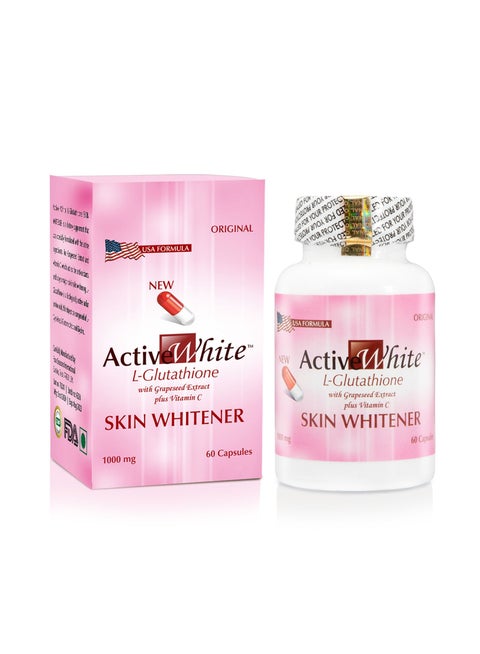
- Glutathione + vitamin C (supports antioxidant networks; can be helpful, but watch total vitamin C dose)
- Glutathione blends with other “brightening” ingredients (kojic acid, niacinamide, or plant extracts—sometimes effective, sometimes just filler without clear dosing)
Quality standards to prioritize
- Clear mg per serving for glutathione (avoid “proprietary blend” when the glutathione amount isn’t clearly listed)
- Third-party testing or a certificate of analysis (COA) that matches the product lot
- Manufacturer transparency (address, contact, batch details)
- Reasonable excipients (you don’t need a chemistry degree, but the label should feel consistent)
How to think about dose (without chasing extremes)
For oral glutathione pills, many mainstream products cluster around “daily supplement” dosing rather than very high megadose levels. The best approach is to choose a dose you can take daily without side effects and that aligns with what the label actually states—then run a short experiment (I’ll outline a 2-week framework later).
Important caution: Don’t stack multiple “whitening” supplements at once just to speed up results. It raises the chance you’ll feel side effects or can’t pinpoint what caused them.
Comparison of Common Options
Below is a practical comparison of common glutathione pill types people ask about when searching which glutathione pill is best for skin whitening. Prices vary by brand and region, so “Cost” is described in relative terms.
| Format | Typical Dose/Use | Pros | Cons | Cost | Best For |
|---|---|---|---|---|---|
| Reduced glutathione capsule/tablet | 1 capsule daily with food (follow label) | Clear labeling when quality-focused; easier to test consistently | Some users report limited visible change; absorption can vary | Low–Medium | Men who want a straightforward option and a baseline test |
| Liposomal glutathione | 1 capsule daily (follow label) | Often marketed for better absorption; can be easier on some stomachs | More expensive; still not guaranteed for strong “whitening” | Medium–High | Those willing to pay for formulation and tracking results closely |
| Glutathione + vitamin C | 1–2 servings daily (follow label) | Supports antioxidant routines; may feel “brightening” through overall wellness | Vitamin C dose may be too high for sensitive stomachs | Low–Medium | Men who already tolerate vitamin C and want a combo |
| Glutathione blend with multiple brighteners | 1 serving daily (follow label) | Broad ingredient approach; sometimes includes complementary compounds | Proprietary blends can hide glutathione amounts; harder to know what caused effects | Medium | People comfortable with multi-ingredient products who read labels carefully |
| Collagen/antioxidant stack featuring glutathione | 1 serving daily (follow label) | Targets skin “support” holistically; may help hydration perception | May shift focus away from glutathione itself; “whitening” claims vary | Medium–High | Men who want skin-support stacks, not a single-ingredient focus |
Buying Framework and Red Flags
If you’re trying to choose which glutathione pill is best for skin whitening, use a framework that rewards transparency and punishes vague marketing.
- Check the glutathione amount: Look for an explicit mg per serving. Avoid “proprietary blends” that don’t clearly state glutathione dose.
- Confirm the form: Reduced glutathione vs liposomal vs blends—form should be clearly described.
- Search for testing: Prefer products that mention third-party testing, COAs, or batch testing.
- Watch ingredient conflicts: If you already take vitamin C, antioxidants, or other brighteners, compare totals to avoid over-stacking.
- Assess practical cost: Price should match dose and testing. A cheap capsule with unclear dosing is often a gamble.
- Look for realistic claims: Red flag = “instant whitening” or guaranteed dramatic results in days.
- Packaging sanity: Clear lot/batch info, expiration date, and manufacturer details.
Safety red flag: If a product discourages stopping after side effects, or if the label is missing basic supplemental facts, skip it. If you can’t tolerate it, it won’t be “best” for your skin routine.
Common Mistakes and How to Avoid Them
- Chasing “whitening” timelines: If you expect large change in 7–14 days, you’ll likely quit early. Test thoughtfully.
- Forgetting sunscreen: Even modest pigmentation changes are strongly influenced by UV exposure. Without sun protection, glutathione pill efforts can feel like they “do nothing.”
- Stacking too many actives: When you combine multiple brightening supplements, stomach issues and unpredictable effects become harder to interpret.
- Not tracking: Take consistent photos (same lighting, angle, and distance). Otherwise, “I think it’s working” turns into noise.
- Using on an empty stomach if you’re sensitive: This was a clear failure point in a negative case for me. If the label allows, try with food.
- Choosing based on hype only: If the product doesn’t clearly state dose and form, it’s harder to evaluate which glutathione pill is best for skin whitening for you.
FAQ
Is it proven which glutathione pill is best for skin whitening?
No single “best” glutathione pill is universally proven to whiten skin for everyone. Oral glutathione has supportive antioxidant rationale, and some consumers report modest brightening, but results vary and strong “whitening” guarantees aren’t appropriate for supplements. The most reliable choice is the one with clear dose/form labeling and good quality signals.
How long does it take for a glutathione pill for skin whitening to show results?
Many people evaluate around 4–8 weeks for subtle changes, with 2–4 weeks being too early for “whitening” claims. That said, if you notice no changes at all and you’re also managing sun exposure carefully, it may not be a good fit for your skin goals.
What side effects can happen from glutathione pills for skin whitening?
Common issues are mild gastrointestinal discomfort (nausea, stomach upset), headache, or feeling “off” in some individuals. If side effects occur, stop and reassess. Avoid continuing just to “push through,” especially if symptoms persist.
Can I combine a glutathione pill with other brightening products?
Often, yes—but start carefully. Avoid stacking multiple intense brightening supplements at once. If you use topical brighteners or prescription skin treatments, check with a clinician to avoid irritation or interaction concerns.
Oral vs injection: is glutathione for skin whitening better by mouth or via alternatives?
Oral glutathione supplements are the common route for “which glutathione pill is best for skin whitening” shoppers. Injection and other medical alternatives are different categories with different risk profiles and should not be treated as a direct comparison. If considering injections or medical-grade alternatives, consult a qualified healthcare professional.
A Practical 2-Week Experiment Framework
If you want a consumer-review approach, don’t commit to months without first validating tolerability and routine fit. Here’s a simple framework for testing glutathione pills for skin whitening without chasing placebo anxiety.
- Day 1–3: Baseline + tolerability
Take the pill exactly as labeled, preferably with food if you’re sensitive. Log any stomach discomfort, headaches, or unusual reactions. - Day 4–7: Consistency check
Keep your skincare routine and sunscreen routine stable. Take one photo under the same lighting each day. - Day 8–14: Photo comparison + “realistic read”
Compare photos from day 1 vs day 14. Expect changes, if any, to be subtle. If there are no negative side effects and you “see something,” you can consider continuing. If you feel side effects or your skin looks irritated from other products, stop and re-evaluate the whole stack.
Decision rule: If the pill causes side effects or disrupts consistency, it’s a no for you. If it’s tolerated but you see no improvement after a longer evaluation period (often 4–8 weeks), move on rather than paying for hope.
About the Author
Jordan Reyes is a long-form consumer reviewer focused on men’s supplements and skin routines. Over several years, I’ve tested and compared oral antioxidant products (including glutathione-style formulations) using consistent dosing logs, side-effect tracking, and photo documentation in neutral lighting. This article reflects consumer-style observations and label-based evaluation—not medical treatment guidance.
Disclaimer: This review is for informational purposes only. Supplements are not a substitute for dermatology care. If you have a medical condition, take prescription medications, or have active skin disease, consult a qualified healthcare professional before starting glutathione pills or any skin-whitening product.
Discussion